

 ENG
ENG  русский
 Español
 عربى
عربىWays to Evaluate High Pressure Pump Efficiency Guide
In pump procurement, specification sheets rarely tell the full story. Two units with nearly identical pressure ratings and flow figures can diverge sharply once they enter service — one maintaining stable output across years of operation, the other requiring intervention within months. The variable responsible for that gap is efficiency. Equipment buyers who understand how to assess it before committing to a purchase are in a meaningfully stronger position than those who rely on rated figures alone. Pressure and flow are visible. Efficiency — and what it costs when it is absent — tends to surface only after the equipment is already installed.
What Does Water Pump Efficiency Mean?
Definition of Pump Efficiency
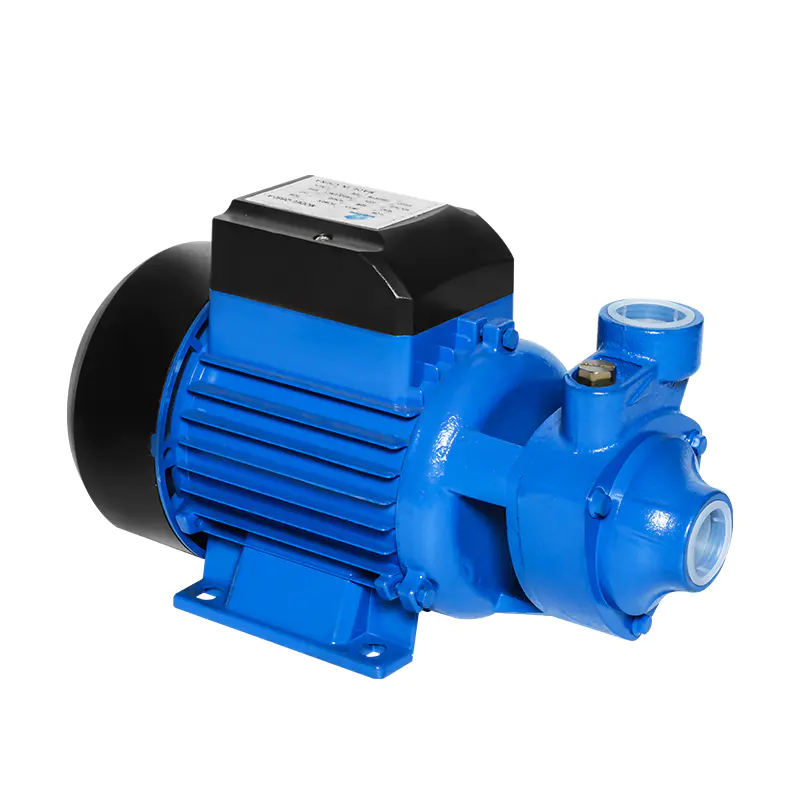
At its core, pump efficiency is a ratio: useful hydraulic output divided by the electrical energy consumed to produce it. A High Pressure Water Transfer Pump that draws substantial power while delivering modest flow is, by definition, inefficient — regardless of what the nameplate says. What matters is not how hard the unit works, but how much of that work reaches the water.
Why Efficiency Matters Beyond Flow Rate
Flow rate gets quoted frequently because it is easy to measure and easy to present. Efficiency is more elusive, which partly explains why it receives less attention during procurement. Over an extended service period, though — particularly in irrigation, agricultural supply, or continuous industrial transfer — inefficiency accumulates into real expenditure. The difference between a well-matched pump and a poorly matched one often becomes visible only through energy bills and unplanned maintenance.
Relationship Between Pressure, Flow, and Efficiency
A pump does not operate at one fixed point. As system resistance shifts, so does the balance between pressure output and flow rate. This relationship traces a curve specific to each unit's design. A pump running well outside that curve — whether through oversizing, poor system design, or changing load conditions — wastes energy in proportion to how far it strays from its intended operating zone.
How Efficiency Affects Operating Costs
Energy cost is the most persistent expense in pump ownership, and it tends to be underweighted during procurement because it is a future cost rather than a present one. An inefficient unit running continuously will accumulate energy charges that exceed its purchase price within a relatively short period. This makes efficiency not just a technical consideration but a financial one — especially for operators running equipment across long seasonal cycles.
Key Performance Indicators for Evaluating Pump Efficiency
Flow Rate Performance
Measured flow under actual operating conditions should align reasonably with rated values. When a significant gap appears, the causes are worth investigating: internal wear, impeller degradation, or a mismatch between the pump's design point and the system it is serving. The gap itself is informative.
Pressure Output Stability
Consistent pressure across varying demand levels is a sign of a well-matched unit. Pressure that drops noticeably during periods of higher draw points to either capacity limitations or internal inefficiencies that will worsen as the unit ages. Stability under load is worth monitoring from early in the equipment's service life.
Power Consumption
Input power measurement during normal operation reveals how much energy the unit is actually consuming — and by extension, how much of that energy becomes useful output. The spread between input power and hydraulic output is where inefficiency lives.
Energy Conversion Efficiency
Comparing hydraulic output against electrical input across multiple candidate units, tested under the same conditions, gives the clearest comparative picture. This calculation strips away marketing framing and replaces it with observable performance data.
Operating Temperature
Heat generated beyond the unit's thermal design range is a sign of energy being lost through internal resistance or friction rather than converted into flow. Running temperatures should be monitored across extended operating periods, not just during initial commissioning.
Overall System Performance
A pump does not determine efficiency on its own. Pipe diameter, fitting quality, elevation changes, and valve configuration all contribute to the load the pump must overcome. Evaluating pump efficiency in isolation from the system it serves produces results that may not hold once the unit enters service.
How Pressure and Flow Rate Work Together
Understanding Pump Curves
The pump curve is a map of how a unit performs across its operating range. Efficiency does not hold constant across that curve — it rises toward a design point and falls away from it in both directions. Selecting a unit whose design point corresponds to the actual system demand is one of the more reliable strategies for sustained performance.
Why Higher Pressure Does Not Always Mean Better Efficiency
A pump generating pressure substantially beyond what the application requires is not performing well — it is simply working harder than necessary. That excess effort translates directly into energy consumption without producing useful output. Matching pressure capability to genuine system requirements, rather than defaulting to a higher-rated unit for safety margin, is a more defensible engineering decision.
Balancing Pressure and Flow Requirements
Certain applications call for high pressure at moderate volume. Others involve large-volume transfer at lower head. A High Capacity Water Pump configured for field-scale irrigation may be entirely unsuitable for a pressurized transfer line requiring precision control. Getting this distinction right before purchase prevents a class of problems that cannot be easily corrected after installation.
Common Efficiency Trade-Offs
More pressure generally means less flow at a fixed power input. Higher flow usually requires either accepting lower pressure or drawing more power. Neither trade-off is inherently problematic — what matters is whether the selected unit's trade-off profile fits the actual application requirements. Chasing headline specification figures without examining these trade-offs is a common procurement misstep.
Factors That Affect Water Pump Efficiency
Motor Quality
Motor construction sets an upper boundary on how efficiently electrical energy becomes mechanical rotation. Quality of windings, bearing tolerances, and thermal management all influence how much energy is lost before the impeller even begins moving water. These are characteristics that rarely change after purchase, which is why they deserve attention during selection.
Impeller Design
Impeller geometry governs the transfer of kinetic energy to the fluid. A well-designed impeller moves water with relatively little turbulence; a worn, corroded, or poorly manufactured one creates flow disruptions that degrade hydraulic efficiency steadily and silently. The impeller's condition at any given point in a unit's service life is often the single largest variable in its actual efficiency.
Pump Housing Construction
Internal clearances between the impeller and housing affect how much fluid recirculates within the casing rather than moving toward the outlet. Rough casting surfaces amplify turbulence. Corrosion narrows clearances in some areas while widening them in others. Each of these factors pulls efficiency downward, often without producing any externally visible symptom.
Pipe System Resistance
Friction losses in connected pipework can be substantial — more so in long runs, narrow-bore configurations, or systems with multiple bends and fittings. In some cases, reducing pipe resistance through system modifications yields more efficiency improvement than replacing the pump. Evaluating system resistance before specifying a pump is a step that is frequently skipped.
Installation Conditions
Suction lift height, inlet geometry, and the proximity of the pump to the water source all influence how effectively the unit draws and maintains flow. Installations that deviate significantly from design assumptions can noticeably reduce efficiency even in units that perform well under controlled test conditions.
Water Source Characteristics
Suspended solids, viscosity variations, and temperature fluctuations in the source water affect both hydraulic behavior and component wear. Units that are not specified to handle these variables may perform within range initially, but wear accelerates — and efficiency declines correspondingly.
Continuous Duty Water Pump Efficiency Considerations
Advantages in Long-Term Operation
A Continuous Duty Water Pump is designed around the assumption that it will run without scheduled rest intervals. Motor insulation ratings, bearing load calculations, and thermal dissipation design are all calibrated for sustained operation rather than the cycling patterns of intermittent-duty equipment. For applications where uninterrupted supply is a requirement — not just a preference — this design difference has practical consequences for both efficiency and reliability.
Thermal Management
Sustained operation generates heat continuously. Without adequate thermal management, heat accumulates in the motor windings and housing to the point where insulation breaks down, bearings degrade, and seals fail prematurely. Cooling design — whether through fins, fan assistance, or liquid cooling — is not an accessory feature; it is a core determinant of how efficiently the unit can sustain output under load.
Energy Consumption During Continuous Use
The compounding effect of even modest energy inefficiency becomes pronounced over long operating periods. A unit drawing modestly more power per hour than a comparable alternative generates a meaningful cumulative cost difference across a full agricultural season or an industrial operating year. Small efficiency advantages matter more in continuous-duty contexts than in applications with limited daily operating hours.
Reliability Under Heavy Workloads
Reliability and efficiency are not separate considerations in continuous-duty applications. A pump that shuts down unexpectedly — or requires unscheduled maintenance — is less efficient in operational terms than a lower-rated unit that runs without interruption. Consistency of output over time is part of what efficiency means in a sustained-use context.
How High Capacity Water Pumps Influence Efficiency
Flow Demands and Efficiency
A High Capacity Water Pump is optimized for volume — moving large quantities of water across the distribution network. Its efficiency profile is shaped around high flow conditions, and applying it in scenarios that actually call for high pressure at moderate volume will produce poor results regardless of the unit's individual quality.
Oversizing vs Proper Sizing
The inclination to install a unit with more capacity than needed is understandable — it feels like building in margin. But a pump running substantially below its design flow point operates inefficiently, consuming energy disproportionate to its output. Oversizing is not a safety measure; it is a source of ongoing waste.
Capacity Matching Strategies
Effective capacity selection involves reviewing demand across the full operating cycle, not just at peak. Seasonal variation, zone-by-zone irrigation scheduling, and realistic growth projections all feed into a rational selection. Water Pump for Farming applications, in particular, involve demand profiles that vary substantially across the year — a factor that often goes unweighted in procurement decisions focused on peak requirements.
Common Capacity Selection Mistakes
Selecting capacity against peak demand without accounting for average operating conditions leads to a unit that is chronically oversized. Selecting for average conditions without sufficient headroom leads to strain during demand peaks. Neither approach produces a good long-term efficiency outcome. The goal is a selection that performs well across the demand range rather than only at one end of it.
How to Test High Pressure Water Transfer Pump Efficiency
Measuring Flow Rate
Flow measurement during actual operation — using a calibrated meter in the discharge line — produces results that reflect real system conditions rather than controlled test environments. The gap between measured output and rated capacity, if any, is informative about both the unit's condition and the degree to which the system itself is limiting performance.
Measuring Pressure Output
Pressure readings at the discharge and inlet, taken simultaneously under working load, give net pressure output under actual conditions. Taking readings at several points across the operating range reveals how the unit's output varies with demand — and where on the pump curve the system is actually running.
Monitoring Power Consumption
A clamp meter or inline power analyzer on the supply circuit provides actual energy draw figures. Combined with flow and pressure measurements, this data allows direct calculation of real-world efficiency — a figure that is directly comparable across units evaluated under the same conditions.
Comparing Performance Under Load
Testing across multiple load conditions — below design, at design, and above design — reveals how the unit behaves across the full operating range. A pump that holds efficiency well across a range of conditions offers more practical value than one tuned narrowly to a single point.
Evaluating Long-Term Stability
Single-point testing captures a moment in time. Monitoring performance over weeks or months reveals how the unit holds its output as components settle and wear begins. Gradual decline in flow or pressure without a corresponding reduction in power draw is a consistent indicator of developing inefficiency.
Signs of Efficiency Loss
Vibration that increases over time, operating temperatures that creep upward, audible changes in motor or impeller behavior, and rising energy draw for equivalent output are all worth tracking. None of these signals is ambiguous. Each points to a specific class of developing problem, and catching them early generally costs less than addressing them after failure.
Efficiency Challenges in Farming and Agricultural Applications
| Application | Key Efficiency Challenge | Recommended Approach |
|---|---|---|
| Irrigation Systems | Variable demand across zones and seasons | Size for average demand with adjustment capability |
| Livestock Water Supply | Extended low-load operation periods | Select units rated for partial-load efficiency |
| Greenhouse Operations | Precise pressure control requirements | Evaluate pressure stability across the operating range |
| Remote Water Transfer | Long pipe runs with high friction losses | Account for system resistance in pump selection |
| Seasonal Peak Demand | Short periods of high-volume requirement | Consider adjustable-speed or modular configurations |
Irrigation Systems
Water Pump for Farming applications covering large irrigated areas involve zone-by-zone demand variation that can swing substantially across a single operating day. Pumps that cannot modulate effectively at partial load waste energy during lower-demand periods — and in agricultural settings, those periods can represent a meaningful share of total annual operating hours.
Livestock Water Supply
Sustained low-volume delivery over extended daily periods places different demands on a pump than periodic high-volume irrigation events. Units that handle sustained low-load operation efficiently are better matched to these applications than equipment sized for throughput that rarely occurs.
Greenhouse Operations
Controlled-environment agriculture places particular demands on pressure consistency. Fluctuations in delivery pressure affect irrigation uniformity and can stress root systems in ways that affect yield. Pressure stability across the working range matters here in ways it may not in less precise agricultural contexts.
Remote Water Transfer Applications
Long distribution runs accumulate friction losses that can substantially increase the effective load on the pump. A unit that tests well over short runs may perform below expectation against an extended network. Calculating actual system resistance — accounting for pipe length, diameter, fittings, and elevation — should precede pump specification in any remote transfer application.
Seasonal Demand Fluctuations
Agricultural demand cycles mean that a Water Pump for Agriculture application selected against peak-season requirements may spend a significant part of the year operating at conditions well below its design point. Considering efficiency at partial load, not only at rated conditions, leads to selections that perform well across the full calendar rather than only during the highest-demand period.
How Smart Water Pumps Improve Efficiency
Automatic Speed Adjustment
A Smart Water Pump fitted with variable frequency drive technology adjusts motor speed in proportion to actual demand rather than running at constant speed regardless of load. During lower-demand periods, the unit draws less power — and that reduction accumulates into meaningful energy savings over the course of a season.
Real-Time Monitoring
Sensor integration provides continuous visibility into flow, pressure, temperature, and power consumption. Operators gain access to data that would otherwise require periodic manual measurement — and that data reveals developing inefficiencies before they produce failures.
Energy Optimization Features
Pattern analysis across operating cycles can surface opportunities to reduce energy draw without compromising delivery. Scheduled irrigation systems with predictable demand profiles benefit particularly from this kind of optimization, since the patterns are consistent enough for meaningful algorithmic learning.
Predictive Maintenance Functions
Operating data trends — bearing temperature, vibration signatures, efficiency ratios — can indicate developing mechanical issues before they produce symptoms visible to an operator. Acting on these indicators early is generally less disruptive and less costly than responding to unexpected failure.
Can a Compact Water Pump Deliver High Efficiency?
Advantages of Compact Designs
A Compact Water Pump offers installation flexibility in space-constrained environments and is generally easier to position, transport, and service than larger equipment. Within its rated operating range, a well-engineered compact unit can deliver efficiency that compares reasonably with larger alternatives.
Efficiency Limitations
The operating range of a compact design tends to be narrower. Running outside that range — whether through demand variation, system changes, or load increases — reduces efficiency more sharply than it would in a larger unit with a broader performance envelope. This is not a flaw in the design; it is simply a constraint of the format.
Suitable Use Cases
Compact units are well suited to supplementary roles: pressure boosting within an established distribution system, serving isolated zones with independent requirements, or handling modest transfer volumes in installations where space is genuinely constrained. They are less appropriate as the primary supply unit in high-demand or continuous-duty configurations.
When Larger Pumps Are Necessary
When sustained flow volume, continuous operating hours, or system pressure requirements exceed what the compact format handles efficiently, the long-term cost of running an undersized unit typically outweighs the convenience of its footprint. The efficiency penalty of chronic under-specification accumulates across service life in ways that are easy to underestimate at the time of purchase.
Common Mistakes When Evaluating Pump Efficiency
Focusing Only on Rated Pressure
Rated pressure is a ceiling, not a performance guarantee under working conditions. It describes what the pump can produce in controlled test conditions — not what it will produce against actual system resistance, at actual installation geometry, over actual operating cycles. Relying on this figure without additional context leaves important performance questions unanswered.
Ignoring Energy Consumption
Purchase price is immediate and visible. Energy consumption is deferred and easy to discount. But for equipment that runs continuously or across extended seasonal cycles, energy cost over the service life of the unit generally exceeds the capital outlay. Total cost of ownership assessments that omit energy consumption produce systematically misleading comparisons.
Comparing Pumps Under Different Conditions
Performance figures measured under different test conditions — different discharge pressures, different inlet configurations, different ambient temperatures — are not directly comparable. Drawing conclusions from such comparisons introduces error that may not surface until well after the procurement decision is made.
Selecting the Wrong Capacity
Both undersizing and oversizing produce inefficiency, through different mechanisms. Undersized units strain under load; oversized units run perpetually away from their design point. A selection that threads the needle between these extremes requires more careful analysis than most procurement processes give it, but the returns are worth the effort.
Overlooking Maintenance Requirements
Maintenance is an efficiency cost that does not appear in specification tables. A unit requiring frequent seal replacements, impeller servicing, or bearing adjustments consumes operational resources — time, labor, and parts — that a lower-maintenance alternative would not. Including this dimension in the evaluation produces a more complete picture of true operating cost.
How Efficiency Impacts Replacement Decisions
When Efficiency Loss Signals Replacement
Efficiency rarely collapses suddenly. It declines gradually — through wear, corrosion, seal degradation, and accumulated operational stress. The signal to consider a Replacement Water Pump appears when restoring efficiency through repair has become more costly, or more disruptive, than commissioning a replacement unit. Tracking performance data over time makes this threshold visible rather than forcing a judgment call based on impression.
Repair vs Replacement Considerations
Repair is the rational choice when degradation is contained — a single worn component in an otherwise sound unit. Replacement becomes preferable when decline has spread across multiple systems simultaneously, or when the unit's generation of technology is far enough behind current designs that restoration still leaves performance below what newer alternatives offer. These are different situations that call for different responses.
Long-Term Cost Evaluation
The decision framework involves comparing projected repair and operating costs against the cost of replacement, including installation and any downtime. Units that have been in service for a substantial period may be candidates for replacement on efficiency grounds alone — not because they have failed, but because the cost of continuing to run them exceeds what a newer unit would cost to acquire and operate.
Performance Improvements From Newer Designs
Motor efficiency, impeller geometry, sealing materials, and thermal management have all improved across successive design generations. A unit that delivered acceptable efficiency when it was installed may now consume substantially more energy than a comparable current design doing the same work. The performance gap between generations is worth quantifying before deciding to continue with aging equipment.
How Buyers Can Identify Efficient Pumps Before Purchase
Reviewing Performance Specifications
Efficiency data, duty cycle ratings, and power factor figures should appear in product documentation without the buyer having to request them. When this information is absent or difficult to obtain, that absence is itself a data point. Manufacturers who test thoroughly tend to publish the results.
Evaluating Manufacturer Testing Data
Performance curves showing output across the operating range, combined with efficiency maps, allow evaluation of how a unit will perform under actual system conditions rather than only at rated values. Requesting this documentation before committing is a standard step in a well-structured procurement process.
Understanding Duty Cycle Ratings
Duty cycle classification defines how long the unit is designed to run before requiring a rest interval. Applying an intermittent-duty unit to a continuous-supply application violates the design assumption and will produce accelerated degradation — along with declining efficiency — regardless of how well the unit's flow and pressure figures match the application.
Assessing Warranty and Reliability
Warranty scope and duration reflect, at least indirectly, the manufacturer's expectation of product durability under normal service conditions. Coverage that is broad and extended suggests a product designed to hold its performance. Coverage that is narrow or heavily qualified warrants closer examination.
Choosing a Reputable Supplier
For buyers intending to Buy Water Pump equipment at Water Pump Wholesale quantities, supply consistency matters alongside unit performance. Quality variation across production batches, long lead times for replacement components, and limited technical support create operational risks that can be as costly as selecting an inefficient unit in the first place. Evaluating the supplier's support infrastructure is as important as evaluating the product itself.
Questions Buyers Commonly Ask
What Is Considered Good Water Pump Efficiency?
Efficiency benchmarks vary across pump type, size, and application category. A more useful question than whether a figure is "good" is whether it is appropriate for the application at hand — and whether it will remain at that level across realistic operating conditions rather than only under controlled test circumstances.
How Can Efficiency Be Measured in the Field?
Flow meters in the discharge line, pressure gauges at inlet and outlet, and a power analyzer on the supply circuit provide the three measurements needed to calculate real-world efficiency. The calculation itself is straightforward once the measurements are in hand and tested under conditions representative of actual operation.
Do High Pressure Pumps Always Use More Energy?
Not inherently. A unit producing high pressure because the application genuinely requires it is operating as intended. The energy cost becomes unnecessary when high pressure is generated for a system that does not need it — the pressure simply becomes wasted resistance. Application match, not pressure rating, determines whether energy consumption is justified.
What Causes Pump Efficiency to Decline?
Impeller wear, seal degradation, internal corrosion, bearing deterioration, and changes in system resistance are the main contributors. Each affects efficiency through a slightly different mechanism, and each can be identified through attentive monitoring before it becomes severe enough to disrupt output.
Are Continuous Duty Pumps More Efficient?
In sustained operation contexts, they are — because their design assumes continuous use. An intermittent-duty unit running without rest cycles will overheat, wear faster, and consume more energy per unit of output than a unit properly designed for the same workload. The efficiency advantage of continuous-duty design is specifically relevant when the application demands uninterrupted supply.
How Does Pump Size Affect Efficiency?
Size affects where the unit operates on its performance curve. A properly sized unit runs near its design point, where efficiency is within range. A unit significantly over or under-specified for its application runs away from that point — and efficiency declines accordingly. Size selection and efficiency outcome are directly linked.
Can Smart Water Pumps Reduce Operating Costs?
Variable speed operation and real-time load monitoring can reduce energy consumption in applications where demand varies. The degree of savings depends on how much actual demand diverges from rated conditions. Applications with wide, predictable demand variation tend to see more value from intelligent control than those with consistently stable load.
When Should an Inefficient Pump Be Replaced?
When the projected cost of continued inefficient operation — in energy, maintenance, and downtime — exceeds the cost of replacement over a reasonable horizon, replacement is the logical choice. Deferring that decision does not reduce costs; it shifts them forward while they continue to accumulate.
What Efficiency Factors Matter Most in Agriculture?
Energy cost per unit of water delivered, pressure stability during active irrigation periods, and mechanical reliability across extended seasonal operation tend to carry the most weight in agricultural procurement decisions. Demand variability across the growing season adds a dimension that is less relevant in industrial applications with steadier load profiles.
How Can Buyers Compare Pumps Fairly?
Standardize the evaluation conditions. Use the same test pressure, the same flow configuration, and the same ambient conditions across all candidate units. Figures measured under different conditions are not meaningfully comparable. Where standardized testing is not possible, requesting certified performance documentation from manufacturers and applying consistent analytical criteria across all submissions is the practical alternative.
Efficiency evaluation is not a single measurement — it is an ongoing process that begins before purchase and continues across the service life of the equipment. A High Pressure Water Transfer Pump that performs well under controlled test conditions may behave differently once it enters service in a real system with its own resistance characteristics, demand variability, and operating environment. Understanding this distinction is what separates a procurement decision grounded in evidence from one based on specification optimism.
The indicators worth tracking — flow output under load, pressure stability across demand levels, energy draw over extended operation, and thermal behavior during sustained use — together form a picture of how efficiently a unit actually performs. No single figure captures all of this. Sustained monitoring across realistic conditions comes closer than any single-point test.
For continuous-duty, high-volume, or agricultural procurement, the supplier relationship also plays a role in long-term efficiency outcomes. Access to technical documentation, responsive support, and consistent component quality across batches all affect how well equipment performs over its full service life. Caifu Pump Industry Co., Ltd. provides pump solutions across agricultural, industrial, and commercial applications, backed by product documentation and technical support resources suited to buyers making efficiency-driven procurement decisions. Engaging their technical team with specific application parameters is a practical step for any operator looking to align equipment selection with actual operating requirements and long-term cost objectives.

Leave A Comment
Recommend Products


Copyright © Caifu Pump Industry Co., Ltd.

High Pressure Water Pump Manufacturer