

 ENG
ENG  русский
 Español
 عربى
عربىContinuous vs Intermittent Duty Water Pump Differences?
Choosing the wrong pump type is a mistake that rarely shows up immediately — it shows up six months later, in a burned motor or a flooded field. Many buyers focus almost entirely on flow rate, pressure rating, and price when evaluating a High Pressure Water Transfer Pump, and in doing so, they skip over a variable that quietly determines whether a pump survives its working environment: duty cycle. Whether a pump is rated for continuous or intermittent operation is not a minor specification footnote. It shapes motor design, heat management, maintenance intervals, and ultimately how long the equipment lasts.
What Is a Continuous Duty Water Pump?
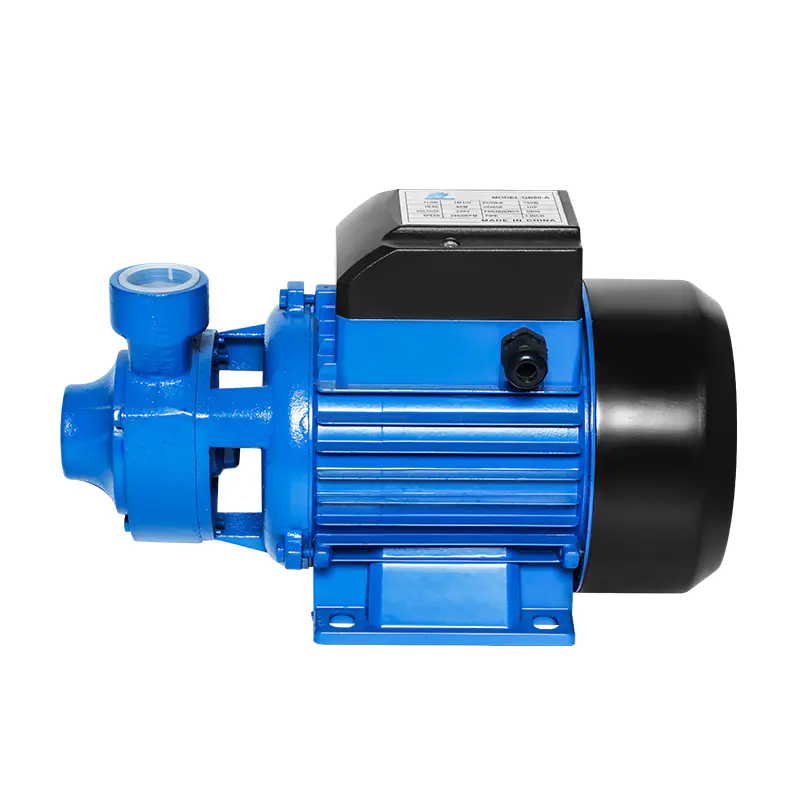
Definition of Continuous Duty Operation
A continuous duty pump is designed to run without interruption for extended periods — hours, shifts, or full days — without needing recovery time. The motor and internal components are built to sustain operation under steady load, which demands a different level of thermal tolerance than start-stop equipment.
How Continuous Duty Pumps Work
The motor in a continuous duty pump is wound and insulated to handle sustained heat generation. Unlike intermittent models, it does not rely on cooling-off periods to bring internal temperatures down. Bearing assemblies, seals, and mechanical parts are similarly specified for prolonged contact and friction loads.
Typical Operating Conditions
These pumps are commonly used where water flow cannot be interrupted:
- Irrigation systems covering large land areas
- Municipal or agricultural water distribution
- Industrial water circulation processes
- Pressure-boosting stations that run across full working shifts
Advantages of Continuous Operation
The practical benefit is predictability. When a Continuous Duty Water Pump is running, it delivers stable pressure and flow without the pressure fluctuations that come from cycling on and off. Over time, that consistency also reduces wear caused by repeated startup current and mechanical shock.
What Is an Intermittent Duty Pump?
Definition of Intermittent Operation
An intermittent duty pump is designed to operate in cycles — run for a period, stop, allow the motor to cool, then run again. The motor is not rated for sustained heat accumulation and will overheat if pushed beyond its designated on-time ratio.
Start-Stop Working Cycles
These pumps rely on structured on/off intervals. The allowed run time and required rest time vary by design, but the principle is consistent: the motor generates heat during operation and dissipates it during rest. Exceeding the on-time limit consistently shortens motor life and can cause permanent winding damage.
Common Application Scenarios
Intermittent pumps suit tasks that are naturally periodic:
- Filling storage tanks or reservoirs on a scheduled basis
- Dewatering during construction or drainage events
- Household water pressure systems with pressure tank storage
- Seasonal or occasional water transfer on small farms
Advantages of Intermittent Pumps
The lower purchase price is the obvious advantage. Because the motor does not need to be built for sustained thermal load, the components can be lighter and less expensive. For applications where the pump genuinely only runs in short bursts, there is no practical need to pay for continuous duty construction.
Continuous Duty Water Pump vs Intermittent Duty Pump: Key Differences
The comparison comes down to engineering choices made at the motor and cooling level, not just operational patterns.
| Feature | Continuous Duty Pump | Intermittent Duty Pump |
|---|---|---|
| Operating Time | Extended, uninterrupted | Cycled with required rest periods |
| Cooling Requirements | Built-in sustained heat management | Relies on rest intervals for cooling |
| Durability | Higher under sustained load | Moderate under correct cycle use |
| Maintenance Frequency | Lower with proper application | Higher if cycles are exceeded |
| Energy Usage Pattern | Stable, consistent draw | Variable, with startup surges |
| Initial Cost | Higher | Lower |
| Suited Application | Irrigation, water transfer | Filling, occasional use |
Operating Cycle Differences
The core difference is not how long a pump can run — it is what happens thermally when it does. Continuous duty models manage heat actively. Intermittent models manage it passively, through stopping.
Motor Design Differences
Continuous duty motors use heavier windings, higher-grade insulation, and larger frame sizes to accommodate sustained load. Intermittent motors use lighter construction that performs within its intended cycle but degrades rapidly outside of it.
Heat Management Differences
In a continuous duty pump, cooling is integrated into the design — either through the pumped fluid, external air circulation, or both. In an intermittent pump, the cooling mechanism is simply time. If the operating cycle is not respected, the pump will overheat.
Reliability Differences
A continuous duty pump used for its intended application tends to have a longer service life and fewer unplanned failures. An intermittent pump used correctly also performs reliably — the reliability issue arises when it is asked to run beyond its rated cycle, which happens more often than buyers anticipate.
Maintenance Differences
Continuous duty pumps, because they are built for the load they handle, typically require less frequent maintenance under normal conditions. Intermittent pumps may need more frequent inspection of motor windings and bearings if they are operating near the edge of their duty rating.
How Duty Cycle Affects Pump Performance
Pressure Stability
A pump of this type running continuously delivers stable downstream pressure. When a pump cycles on and off, pressure fluctuates with each start and stop. For irrigation systems or industrial water lines where consistent pressure matters, those fluctuations can affect distribution uniformity and downstream equipment.
Flow Consistency
Flow rate follows pressure. Intermittent operation produces varying flow conditions across the cycle, while continuous operation maintains a steady volume per unit time. Applications that depend on uniform flow — drip irrigation, cooling circuits, process water — benefit from continuous operation.
Motor Efficiency
Startup current draw is higher than running current draw. A pump that starts and stops frequently incurs that startup energy cost repeatedly, which adds up in high-cycle applications. Continuous operation eliminates repeated startup loads and tends to be more energy-efficient per volume of water moved.
Equipment Lifespan
Mechanical components — impellers, seals, bearings — experience stress at startup and shutdown as well as during operation. Frequent cycling accelerates wear on these components even if the motor is not being thermally stressed. The fewer startups per day, the lower the cumulative mechanical fatigue.
System Reliability
In a critical application — agricultural water supply, livestock systems, or industrial transfer — unplanned downtime carries real cost. Continuous duty equipment is generally designed with system reliability as a priority. Intermittent systems are acceptable for lower-criticality applications where a pause in water supply is manageable.
Which Pump Is Better for High Pressure Water Transfer?
Applications Requiring Continuous Pressure
Gravity-feed irrigation, drip systems, and elevated storage supply lines all depend on sustained pressure throughout the operating period. For these applications, a continuous duty pump is the appropriate choice. Pressure drops caused by pump cycling will disrupt distribution uniformity and can cause downstream equipment to behave inconsistently.
Applications Requiring Occasional Transfer
Tank filling, manual irrigation, and dewatering projects are better matched to intermittent duty equipment. The pump runs, moves a defined volume of water, and stops. There is no requirement for sustained pressure, and the natural pause between cycles fits the intermittent duty model.
When a High Capacity Water Pump Is Necessary
A High Capacity Water Pump becomes relevant when the volume demand exceeds what a standard unit can deliver within a reasonable operating window. In farming, this often occurs when multiple zones are irrigated simultaneously or when large-scale water storage must be replenished quickly. Capacity selection should account not just for average demand but for peak demand conditions, which often differ from day-to-day averages.
Common Water Transfer Challenges
Buyers frequently underestimate:
- The actual hours per day the pump will run, particularly in busy seasons
- The distance and elevation change involved in water transfer
- Whether the water source has consistent supply or requires pump adjustment
- How future expansion might change demand
Each of these factors can shift the appropriate duty cycle choice if not accounted for during selection.
Pump Selection for Farming and Agriculture
Irrigation Systems
A Water Pump for Farming that feeds an irrigation network needs to be matched to the network's operating schedule. If irrigation runs for eight or more hours per day, an intermittent duty motor running continuously across those hours will fail ahead of schedule. Continuous duty construction is the appropriate specification.
Livestock Water Supply
Livestock water systems often need to maintain pressure throughout the day as animals drink at irregular intervals. A pump that cycles off and takes time to restart can leave animals without water during high-demand periods. Continuous duty models handle variable but sustained draw more reliably.
Greenhouse Applications
Greenhouse irrigation cycles tend to be precise — specific volumes at specific intervals, often controlled by timers or sensors. Depending on the frequency and duration of these cycles, either pump type may be appropriate, but high-frequency short cycles favor continuous duty construction to avoid repeated startup stress.
Large-Scale Agricultural Operations
Large farm operations with substantial acreage, multiple irrigation zones, or combined livestock and crop needs almost always benefit from continuous duty equipment. The cumulative daily operating hours across a full agricultural season represent exactly the kind of sustained load intermittent equipment is not designed to handle. A Water Pump for Agriculture at this scale is infrastructure, not just equipment.
Seasonal Farming Requirements
Seasonal demand creates a specific challenge: the pump may sit idle for months, then face peak demand suddenly. Equipment that has been idle should be inspected before intensive seasonal use, and the selection decision should be based on peak-season demands rather than average annual use.
How Pump Size and Capacity Influence Duty Cycle Selection
Flow Rate Requirements
An undersized pump running at its capacity limit to meet demand is already under sustained stress. If the motor is also intermittent duty, the combination accelerates degradation significantly. Sizing the pump so it operates comfortably within its rated capacity reduces thermal and mechanical load.
Pressure Requirements
Elevation change, pipe friction losses, and distance all affect the pressure a pump must generate. A pump selected purely on flow rate without accounting for pressure requirements will either underperform or work harder than its design intends, shortening its service life regardless of duty rating.
Distance of Water Transfer
Longer transfer distances increase the pressure requirement and the time required to complete each cycle. For extended transfer distances, the operating duration per cycle increases, which can push an intermittently rated unit into continuous territory without the buyer realizing it.
Water Source Conditions
A consistent pressurized water source allows the pump to operate within predictable parameters. A variable source — such as a surface water intake subject to seasonal fluctuation — may require the pump to compensate for varying inlet conditions, which changes the effective load on the motor and components.
Storage Tank Applications
When a pump feeds a storage tank, the duty cycle is determined by tank draw rate and refill frequency. In low-draw situations, the pump may run briefly and stop for long periods — well within intermittent duty parameters. In high-draw situations, the pump may need to run nearly continuously to keep up, which shifts the requirement toward continuous duty construction.
Energy Consumption and Operating Costs
Continuous Operation Cost Considerations
A continuously running pump draws a steady, predictable load. The energy cost per shift is calculable and consistent. Over time, this predictability supports budgeting and makes it easier to identify any performance degradation — an increase in energy draw often signals a mechanical issue before it becomes a failure.
Intermittent Operation Cost Considerations
Startup current draw exceeds running current draw. A pump that starts frequently incurs that excess cost repeatedly. In low-cycle applications, this is negligible. In high-cycle applications — where the pump starts and stops dozens of times per day — the cumulative energy cost of repeated startup can be meaningful.
Maintenance Cost Comparison
Continuous duty equipment, when correctly applied, typically requires less unscheduled maintenance. Intermittent duty equipment used at or beyond its cycle rating tends to require more frequent motor inspection, seal replacement, and bearing service. Over a full service life, total maintenance cost often favors continuous duty equipment even when initial cost is higher.
Replacement Frequency Considerations
A Replacement Water Pump purchase represents real cost — not just the equipment but the downtime, installation labor, and any production loss during the interruption. Equipment correctly matched to its application runs longer between replacements. Incorrect duty cycle selection is one of the factors that drives premature replacement cycles.
How Smart Water Pumps Are Changing Duty Cycle Management
Automatic Monitoring
A Smart Water Pump with integrated sensors can track motor temperature, current draw, and operating hours in real time. This allows the system to flag when a pump is approaching thermal limits rather than relying on the operator to monitor conditions manually.
Load-Based Operation
Smart systems can adjust pump output based on actual demand rather than running at a fixed rate. During low-demand periods, the pump reduces output rather than cycling fully on and off, which reduces both energy consumption and the mechanical stress of repeated starts.
Remote Control Functions
Remote monitoring allows operators to manage pump operation without being physically present at the installation. For agricultural applications covering large areas, this reduces labor and allows faster response when conditions change.
Efficiency Improvements
Variable-load operation extends motor life by reducing peak thermal events. By avoiding unnecessary full-speed startup cycles, smart pump systems reduce the cumulative wear that shortens conventional pump service life.
When a Compact Water Pump Is the Better Choice
Portable Applications
Not every water transfer task requires a fixed installation. A Compact Water Pump handles portable tasks — temporary dewatering, small plot irrigation, emergency water supply — without the infrastructure that larger fixed units require.
Limited Installation Space
Where installation space constrains equipment size, compact units offer a practical path to meeting water transfer requirements without compromising the installation. Many compact designs provide performance comparable to larger units within a smaller footprint.
Residential and Small Farm Use
Small farms and residential properties rarely have the demand that justifies large continuous duty equipment. A Compact Water Pump matched to actual load requirements avoids the inefficiency of oversized equipment running well below its rated capacity.
Temporary Water Transfer Projects
Construction sites, temporary agricultural setups, and event water supply represent time-limited needs. A compact, intermittent duty unit suited to the task and easy to relocate makes more practical sense than permanent infrastructure equipment.
Common Mistakes When Choosing a Water Pump
Ignoring Duty Cycle Requirements
Duty cycle mismatch drives more pump failures in incorrect applications than almost any other factor. Buyers select a pump that meets their flow and pressure requirements, overlook the duty cycle rating, and then run it beyond what the motor can sustain.
Choosing Only Based on Flow Rate
Flow rate matters, but a pump that delivers adequate flow while being undersized for pressure requirements will work harder than it should. Over time, operating under elevated load shortens its life even if the flow targets are nominally met.
Overlooking Pressure Requirements
Elevation, pipe length, and friction losses all determine the pressure a pump must generate. Ignoring these factors during selection produces equipment that either cannot meet demand or operates at an uncomfortable load margin.
Selecting an Undersized Pump
An undersized pump running continuously near its capacity limit accumulates thermal and mechanical wear faster than a correctly sized unit. Buying on the lower end of the capacity range to save cost often results in a shorter service life and a faster replacement cycle.
Ignoring Future Expansion Needs
Agricultural and industrial operations tend to expand over time. A pump that fits current demand may be insufficient within a few seasons. Selecting equipment with some margin above current requirements avoids the need to replace functional equipment simply because demand has grown.
How to Choose the Right Water Pump for Your Application
For Continuous Irrigation Systems
Select a continuous duty pump with a flow rate and pressure specification that covers peak demand, not just average demand. Verify that the duty cycle rating matches the actual daily operating hours expected during the growing season.
For High Pressure Transfer Applications
Equipment selected for extended transfer distances must be selected with both pressure and flow in mind. Confirm the pump can sustain the required outlet pressure across the full operating period without thermal derating.
For Agricultural Operations
Consider:
- Daily operating hours at peak demand
- Distance and elevation of water transfer
- Whether multiple zones run simultaneously
- Expected expansion over the next several seasons
For Industrial Water Movement
Industrial applications often involve longer shift hours than agricultural use. Continuous duty construction is typically required, and spare parts availability should be confirmed before selection.
For Replacement Projects
When replacing an existing pump, evaluate why the previous unit failed. If the failure was thermal, the replacement should have a higher continuous duty rating. If the failure was mechanical, inspect the installation for conditions — vibration, debris, incorrect piping — that may have contributed.
Questions Buyers Commonly Ask
Can an Intermittent Duty Pump Run Continuously?
It can run — but not without consequence. The motor will overheat progressively, insulation will degrade, and the service life will be dramatically shortened compared to correct application. It is not a matter of immediate failure but of accelerated degradation.
How Long Can a Continuous Duty Water Pump Operate?
Designed for sustained load, a continuous duty pump can operate for extended shifts or full days when installed correctly, maintained per schedule, and matched to an appropriate load. Environmental conditions — ambient temperature, ventilation — also affect sustained operating capability.
Which Pump Type Lasts Longer?
Under correct application, continuous duty pumps generally outlast intermittent models in demanding scenarios. However, an intermittent duty pump used within its intended cycle can have a long service life. The comparison only becomes unfavorable when either type is operated outside its design parameters.
Do Continuous Duty Pumps Consume More Electricity?
Per hour of operation, yes — a continuous duty pump draws steady power across a longer operating period. But comparing total energy cost requires accounting for the full operating cycle. In high-use applications, the energy consumed per volume of water transferred can actually be lower for continuous duty equipment due to the elimination of repeated startup surges.
What Is a Reliable Pump for Irrigation Systems?
For irrigation systems with extended daily operating hours, continuous duty equipment is the practical choice. It delivers consistent pressure and flow, reduces the risk of mid-operation failures, and handles the thermal demands of prolonged agricultural use.
How Do I Know If I Need a High Capacity Water Pump?
Assess the volume of water your system needs to move within your operating window. If current equipment runs at or near its capacity limit during peak demand, a High Capacity Water Pump is worth considering — either as a replacement or as a supplemental unit for peak periods.
Can a Compact Water Pump Handle Agricultural Tasks?
For small plots, supplemental irrigation, or temporary setups, yes. For large-scale, high-volume agricultural applications, a compact pump will typically be insufficient in either flow capacity or duty cycle rating. Matching the pump scale to the actual task scope is the deciding factor.
When Should a Replacement Water Pump Be Installed?
Replace when:
- Motor temperature consistently exceeds normal range
- Outlet pressure has dropped noticeably despite normal inlet conditions
- Unusual noise or vibration has developed
- Maintenance interventions are becoming more frequent
Waiting for complete failure in a critical application is rarely worthwhile.
Are Smart Water Pumps Worth Considering?
For operations where downtime is costly or where remote management would reduce labor requirements, a Smart Water Pump with monitoring and adaptive control can return its cost advantage over time. The value is proportional to the scale and criticality of the application.
What Factors Have the Largest Effect on Pump Lifespan?
The factors with the greatest impact are:
- Correct duty cycle application
- Adequate sizing relative to demand
- Water quality at the inlet
- Ambient operating temperature
- Maintenance consistency
Of these, duty cycle mismatch is the factor that shortens pump life fastest, because it operates invisibly until the damage is done.
Duty cycle is not a secondary specification. It is the variable that determines whether a pump survives its working environment or gradually degrades under conditions it was never designed to handle. Continuous duty pumps are built for sustained operation where stopping is not an option. Intermittent duty pumps are built for applications where cycling is natural and rest periods are part of the working pattern. Neither is universally better — the right choice depends on actual operating hours, pressure requirements, and the consequences of unplanned downtime in the specific application.
For agricultural users, the operating hours during irrigation season often exceed what buyers initially estimate, making continuous duty construction a practical necessity rather than a premium option. For high pressure water transfer applications, sustained pressure consistency is a system requirement, not a preference. Selecting equipment that matches those real-world demands, rather than selecting on price or nominal specifications alone, is what separates purchases that deliver years of reliable service from those that generate premature replacement cycles.
If you are evaluating water pumps for farming, irrigation, or industrial water transfer — whether for a single installation or as part of a wholesale sourcing decision — Caifu Pump Industry Co., Ltd. offers a range of equipment across duty cycle types, capacities, and pressure ratings suited to varied operational requirements. Connecting with their team before finalizing a specification can help confirm that the selected equipment is correctly matched to your application before the purchase decision is made.

Leave A Comment
Recommend Products


Copyright © Caifu Pump Industry Co., Ltd.

High Pressure Water Pump Manufacturer