

 ENG
ENG  русский
 Español
 عربى
عربىHow High Capacity Water Pumps Improve Distribution
Inconsistent water pressure, slow refill times across a large irrigation block, and a pump that struggles under sustained demand are problems that compound quietly until an entire operation feels the impact — a crop section that dries out before the next cycle, a municipal supply line that cannot meet peak demand, an industrial process that stalls waiting for water to arrive. A High Capacity Water Pump addresses this category of problem directly, but understanding how higher capacity actually translates into better distribution efficiency, rather than simply moving more water faster, requires looking past the headline flow rate and into how these systems behave under real operating conditions.
What High Capacity Actually Means in Practical Terms
Flow Rate Is Only Part of the Picture
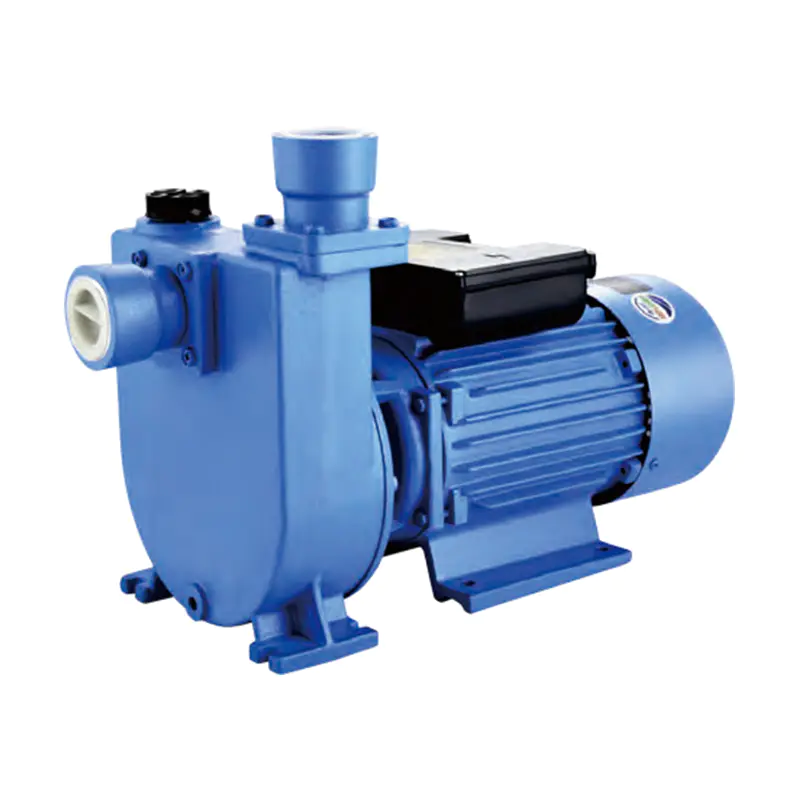
A High Capacity Water Pump is typically defined by its ability to move a large volume of water per unit of time, but capacity in a meaningful operational sense involves more than raw flow rate. The pump also needs to sustain that flow against the resistance of the system it serves — pipe friction, elevation change, and the cumulative effect of distance over long transfer runs.
This is why two pumps with similar headline flow ratings can perform very differently once installed in a real system. The pump that maintains its rated flow against higher system resistance is delivering genuinely higher effective capacity than one whose flow rate drops sharply as resistance increases. Evaluating capacity in isolation from the pressure and head characteristics of a specific application produces an incomplete picture of how the pump will actually perform.
The Relationship Between Flow Rate, Pressure, and Head
Three variables interact to determine how effectively a pump distributes water across a system: flow rate, the volume moved per unit time; pressure, the force driving that volume through the system; and head, the total resistance the pump must overcome, including vertical lift and friction losses through piping.
A pump engineered for high capacity needs to maintain an effective balance across all three. A pump that produces high flow at low head but loses most of that flow once head increases is not well suited to applications involving elevation change or long transfer distances. Conversely, a High Pressure Water Transfer Pump optimized primarily for overcoming head may sacrifice some flow rate at the lower end of its operating range. Matching pump characteristics to the actual head and distance profile of the application is what determines whether the rated capacity translates into real-world distribution efficiency.
How Higher Capacity Improves Distribution Efficiency
Reducing the Time Required to Move a Given Volume
The most direct efficiency gain from a high capacity pump is the reduced time needed to deliver a required volume of water to its destination. For applications with defined delivery windows — irrigation cycles that need to complete before temperatures rise, municipal demand peaks that require rapid response, or industrial processes waiting on water supply — completing the transfer faster directly improves the overall throughput of the system it serves.
This time reduction compounds across repeated cycles. An irrigation system that completes its watering cycle in less time allows more flexibility in scheduling, reduces the operating window during which energy and labor are committed to the task, and in many cases allows water delivery to be timed more precisely around conditions that affect absorption and evaporation.
Maintaining Consistent Pressure Across Distribution Points
In systems serving multiple distribution points — a multi-zone irrigation layout, a municipal network with various demand points, or an industrial facility with multiple water-consuming processes — maintaining consistent pressure across all points simultaneously is a recurring challenge. Undersized pumps that meet demand adequately at a single point often show pressure drop when multiple points draw water at once.
A pump with sufficient capacity margin above peak simultaneous demand maintains more consistent pressure across the full distribution network, reducing the uneven delivery that occurs when a system is pushed close to its maximum capacity during high-demand periods. This consistency matters particularly for applications where uneven pressure translates directly into uneven outcomes — irrigation uniformity across a field, for example, or consistent process water delivery across parallel industrial lines.
Reducing Transfer Losses Over Long Distances
Long-distance water transfer — moving water from a source to a distant point of use — experiences friction losses that increase with distance and pipe diameter constraints. A pump with adequate capacity margin compensates for these losses more effectively than a marginally sized pump, maintaining usable pressure and flow at the delivery point rather than experiencing significant degradation across the transfer distance.
For agricultural operations drawing from a distant water source, municipal systems serving extended distribution areas, and industrial sites where the water source is not co-located with the point of use, this capacity margin is what determines whether the system delivers adequate performance at the far end of the distribution network or only near the pump itself.
Comparing Pump Capacity Characteristics
| Characteristic | Standard Capacity Pump | High Capacity Water Pump |
|---|---|---|
| Flow rate under low resistance | Adequate for moderate demand | Higher, supports larger simultaneous draw |
| Performance under high head | Significant flow reduction | Maintains stronger flow under elevation or distance |
| Multi-point distribution | Pressure drop likely under simultaneous demand | More consistent pressure across distribution points |
| Suited transfer distance | Shorter distances | Longer distances with reduced loss impact |
| Continuous operation suitability | Variable, depends on duty rating | Often paired with continuous-duty design |
| Typical application scale | Small to medium operations | Medium to large agricultural, industrial, and municipal systems |
Why Continuous Duty Capability Matters for Distribution Reliability
What Continuous Duty Rating Actually Means
A Continuous Duty Water Pump is rated to operate for extended periods without requiring rest cycles to avoid overheating or premature mechanical wear. This is a distinct specification from flow rate or pressure capability, addressing how long the pump can sustain operation rather than how much it moves at any given moment.
For distribution systems where demand is sustained rather than intermittent — agricultural irrigation running for extended daily cycles, municipal systems maintaining continuous supply pressure, or industrial processes requiring uninterrupted water delivery — a pump not rated for continuous duty risks thermal stress, accelerated wear, or unexpected shutdown if operated beyond its intended duty cycle.
How Duty Cycle Affects Overall System Reliability
Pairing high capacity with continuous duty capability addresses two distinct but related reliability concerns. High capacity ensures the pump can meet peak and sustained demand without flow degradation. Continuous duty rating ensures the pump can sustain that performance level across the operating hours the application actually requires, without intervention or rest periods that would otherwise interrupt distribution.
A high capacity pump that lacks adequate continuous duty rating may perform impressively during short test periods or brief operational windows but show declining performance, increased maintenance requirements, or premature failure when subjected to the sustained operating hours typical of agricultural, industrial, or municipal applications.
Application Contexts Where High Capacity Pumps Improve Outcomes
Agricultural Irrigation Efficiency
In agricultural irrigation, water distribution efficiency directly affects crop outcomes, water resource management, and operational cost. A High Capacity Water Pump supporting an irrigation system allows larger field areas to be watered within a defined time window, supports more uniform pressure across sprinkler or drip distribution networks, and reduces the operational window during which energy and labor resources are committed to irrigation tasks.
For operations managing variable field sizes, seasonal demand fluctuation, or expansion of irrigated area over time, capacity margin built into the initial pump specification avoids the need for premature system replacement as demand grows.
Industrial Water Supply Systems
Industrial facilities relying on water for cooling, processing, cleaning, or other operational functions depend on consistent, adequate supply to avoid production interruption. A High Capacity Water Pump supporting industrial water supply reduces the risk that simultaneous demand from multiple processes creates a bottleneck, and supports facility expansion without requiring an immediate pump upgrade when additional water-consuming equipment is added to the operation.
For facilities operating around continuous production schedules, the combination of high capacity and continuous duty rating addresses both the volume and the sustained operational demands that industrial water supply applications typically involve.
Municipal Water Transfer and Distribution
Municipal water systems face variable demand patterns across daily and seasonal cycles, with peak demand periods placing significant pressure on distribution infrastructure. High Capacity Water Pumps supporting municipal transfer and distribution networks provide the margin needed to maintain service quality during peak demand without the pressure degradation that undersized systems experience.
For municipal infrastructure planning, capacity specification needs to account not just for current peak demand but for anticipated growth in service area population and consumption patterns, since pump infrastructure typically represents a longer-term capital investment than many other system components.
Evaluating Pump Specifications Beyond the Headline Numbers
Questions Worth Asking Before Specification
For engineers, facility managers, and procurement teams evaluating High Capacity Water Pump options, moving past the headline flow rate figure to understand actual operating performance requires asking specific questions:
- At what head and pressure conditions is the rated flow capacity measured, and how does that compare to the actual operating conditions of the intended application?
- What continuous duty rating does the pump carry, and is it adequate for the anticipated daily and seasonal operating hours?
- How does the pump's performance curve behave across a range of operating conditions, not just at the single rated point?
- What capacity margin exists above current peak demand to accommodate future growth or unexpected demand spikes?
- What maintenance requirements and expected service intervals does the manufacturer specify for sustained high-capacity, continuous duty operation?
Matching Pump Selection to System Design
Effective pump selection is not simply choosing the highest available capacity rating. It involves matching the pump's flow, pressure, and head characteristics to the specific demands of the distribution system it will serve, with adequate margin to handle peak demand and future growth without unnecessary oversizing that increases capital and operating cost without corresponding benefit.
For applications involving long transfer distances, significant elevation change, or multi-point simultaneous demand, a High Pressure Water Transfer Pump with strong performance under high head conditions may be more relevant to the application than a pump optimized primarily for flow rate at low resistance. Understanding the specific operating profile of the application before finalizing pump specification leads to a system that performs reliably across its actual working conditions rather than only under ideal test parameters.
Maintenance Considerations That Preserve Capacity Over Time
A pump specified correctly at installation does not automatically retain its rated capacity indefinitely. Wear in impellers, seals, and bearings gradually reduces effective flow and pressure output, even when the pump continues to operate without obvious failure. For systems where distribution efficiency directly affects operational outcomes, periodic performance verification against original specification helps identify capacity degradation before it becomes a service-affecting problem.
Routine attention to filtration upstream of the pump, monitoring for cavitation symptoms under varying suction conditions, and following manufacturer-recommended service intervals for seals and bearings all contribute to sustaining the capacity and continuous duty performance that the original specification was designed to deliver across the system's working life.
Building Reliable Distribution Systems Around the Right Pump Capacity
Improving water distribution efficiency through pump capacity is ultimately about matching pump performance characteristics to the real operating demands of the system being served, rather than defaulting to the highest available flow rating without considering how that capacity behaves under actual head, pressure, and duty cycle conditions. A pump that maintains consistent flow and pressure across distribution points, sustains performance over continuous operating hours, and carries adequate margin above current peak demand delivers genuine efficiency improvement — reduced transfer time, more uniform distribution, and lower risk of capacity-related service interruption. For agricultural operations, industrial facilities, and municipal systems planning new pump installations or evaluating upgrades to existing infrastructure, working through these performance variables in the context of the specific application produces a more reliable and cost-effective outcome than specification based on headline numbers alone. Caifu Pump Industry Co., Ltd. manufactures a range of water pump solutions including high capacity and continuous duty designs suited to agricultural, industrial, and municipal distribution applications, and can support engineers and procurement teams with technical specification guidance, performance data, and sourcing terms for projects requiring reliable, sustained water transfer capability.

Leave A Comment
Recommend Products


Copyright © Caifu Pump Industry Co., Ltd.

High Pressure Water Pump Manufacturer