

 ENG
ENG  русский
 Español
 عربى
عربىAutomatic Booster Pump or Manual Pump: Key Differences
Weak water pressure is one of those household problems that feels minor until it starts affecting real life. A shower that barely rinses out shampoo. A washing machine crawling through a fill cycle. Taps delivering a trickle the moment two fixtures run at once. For anyone living with these conditions, the practical question arrives fast: what kind of pump actually fixes this, and which control approach makes the most sense for a home? A Household Booster Pump handles the pressure problem itself — but the choice between automatic and manual control shapes how that solution actually performs, day after day, across the unpredictable rhythms of domestic water use.
Why Does Household Water Pressure Become Unstable?
Residential water pressure is rarely constant. It shifts based on supply conditions, pipe diameter, building height, time of day, and how many fixtures are running at once. Understanding what creates the instability helps explain why control method matters beyond just personal preference.
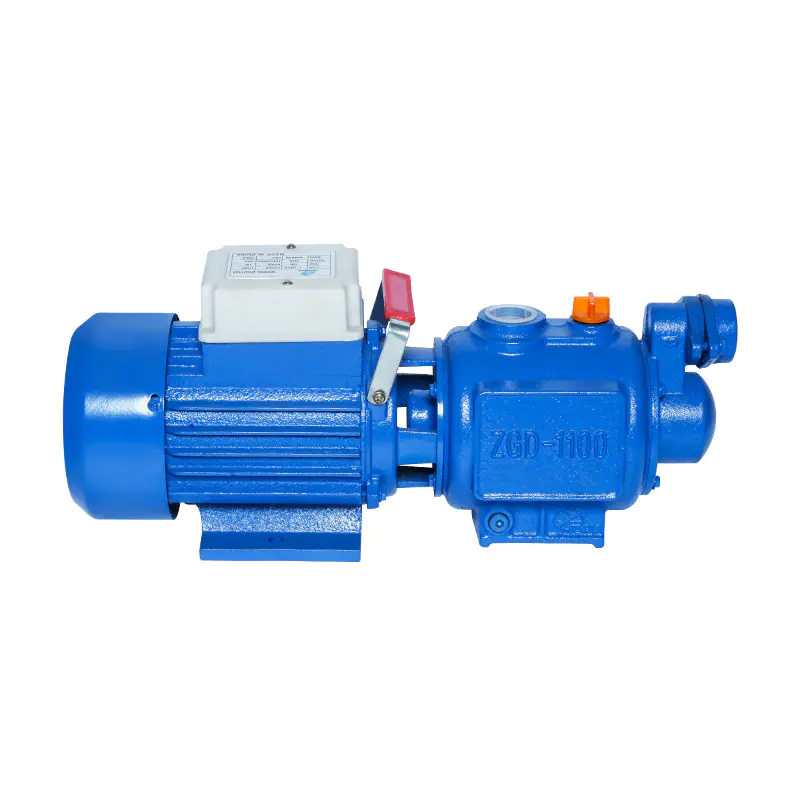
Common causes of pressure problems at home:
- Living on upper floors of multi-story buildings where gravity steadily reduces supply pressure
- Older properties with narrow pipe runs that restrict flow more than modern installations
- Areas where municipal supply pressure varies noticeably across the day
- Homes with solar water heaters or rooftop tanks relying on gravity feed
- High-demand periods — typically morning and evening — when simultaneous use drops system pressure across the board
A booster pump addresses these conditions by adding pressure to the incoming supply before it reaches any fixture. The control method determines how and when that boost gets applied — and that distinction has more practical consequence than it might initially appear.
How Does an Automatic Booster Pump Work?
An automatic pump uses a pressure sensor or flow sensor to detect when water is being drawn from the system. When a tap opens or a shower starts, the sensor picks up the drop in pressure or the movement of water and triggers the pump without any user involvement. When demand stops, the pump shuts off on its own.
Nobody in the household needs to think about it. The system responds to what is happening in the pipes.
Key characteristics of automatic control:
- Pressure or flow sensing activates the pump without any manual step
- The pump runs only during actual water use, which limits unnecessary operation
- Output pressure stays consistent regardless of which fixture is running
- Works naturally in homes where multiple people use water at different times
The convenience factor here is genuine — not just a marketing point. Nobody remembers to switch a pump on before a shower or off afterward. It simply handles itself in the background, which suits the way most households actually function.
What Is a Manual Control Pump and How Does It Differ?
A manual control pump runs through a switch. The user turns it on before using water and off afterward. No sensing, no automation — just a switch and a motor.
That simplicity is simultaneously the appeal and the constraint. Fewer components means less that can go wrong electronically. There is nothing to calibrate, no sensor to drift out of range over time, no control board to replace.
Where manual operation creates friction in a home setting:
- Requires consistent user behavior — remembering to switch on before use and off afterward
- Running the pump longer than necessary wastes energy without any obvious signal
- Inconsistent shutdown timing produces pressure swings that undercut the whole point of having a booster
- In households with several people using water independently throughout the day, coordinating pump state becomes genuinely awkward
Manual pumps suit situations where water use follows a predictable schedule — filling a storage tank at a set time, running garden irrigation on a routine — rather than the variable, on-demand pattern of normal household life.
Does Automatic Control Actually Save Energy?
Worth thinking through carefully, because the intuitive answer — automation is always more efficient — is not automatically true in every scenario.
An automatic pump with a properly calibrated pressure switch runs only when demand calls for it. That genuinely beats a manual pump left running longer than the situation requires. In households where pump operation gets carefully managed by hand every time, the energy gap narrows. But manual discipline in domestic settings is inconsistent. Pumps get left on. They get switched on earlier than needed and forgotten afterward.
The realistic comparison for typical home use tilts toward automatic control for one straightforward reason: the pump does not run when nobody is drawing water. Achieving the same result manually depends on human behavior holding steady across every family member, every day — which it rarely does.
That said, automatic systems with poorly calibrated sensors can cycle on and off repeatedly in response to minor pressure fluctuations, a condition called short cycling. This behavior increases both energy consumption and motor wear. A well-specified pump with appropriate pressure settings avoids it — but it is worth confirming during the selection process rather than assuming.
Which Option Works Better in Multi-Story Homes?
Multi-floor properties present specific pressure challenges that make control method selection more consequential than in a standard single-story home.
In a multi-story setting:
- Upper floors consistently receive lower pressure than ground-level supply
- Different floors can have noticeably different pressure experiences from the same system
- Morning and evening demand peaks create pressure drops that affect the whole building
- Simultaneous use across floors happens without any coordination between occupants
Automatic control handles this environment more naturally. When someone starts a shower on the third floor while a kitchen tap runs downstairs, the sensor responds to the combined demand without either person taking any action. The pump adjusts to what the pipes need at that moment.
Manual control creates a coordination problem in this scenario. Managing pump state across concurrent, unpredictable use across multiple floors is impractical in a family home. It works in a single-occupancy property with a predictable routine. In a household with varied schedules and multiple users, it becomes a source of friction rather than a solution.
How Do the Two Options Compare on Maintenance?
This question gets less attention during selection than it probably deserves — and the answer is more nuanced than a simple "automatic needs more maintenance."
Automatic pumps contain more components: pressure or flow sensors, electronic control boards, sometimes variable speed controllers. Each added component introduces a failure point that does not exist in a manual system. Sensor drift — where the pressure switch gradually loses calibration over time — is one of the more common issues. It can cause the pump to activate at wrong thresholds or fail to cut off cleanly, which compounds into other problems.
Manual pumps are simpler. A worn switch or a seized impeller cover most of the typical failure territory, and both are relatively easy to diagnose. There is no electronic layer to work through.
The practical trade-off:
- Automatic pumps benefit from periodic sensor checks and calibration verification
- Manual pumps need less diagnostic work but depend on consistent user operation to perform as intended
- Both require periodic inspection of seals, connections, and motor condition regardless of control type
- Automatic systems may eventually need electronic component replacement that manual pumps simply do not involve
Neither option is maintenance-free. The question is really about what kind of maintenance fits the household — periodic electronic calibration, or consistent operational discipline from the people using it.
Side-by-Side Comparison: Automatic vs Manual
| Factor | Automatic Booster Pump | Manual Control Pump |
|---|---|---|
| Activation method | Pressure or flow sensor — no user input needed | User-operated switch |
| Day-to-day convenience | High — operates without attention | Lower — requires consistent manual management |
| Energy use in practice | Efficient when properly calibrated | Depends heavily on user behavior |
| Pressure consistency | High — responds to real-time demand | Variable — depends on when pump is switched on |
| System complexity | Higher — includes sensors and control electronics | Lower — switch and motor only |
| Maintenance requirements | Sensor calibration and electronic components | Switch and mechanical parts |
| Suitability for multi-user homes | Well-suited to varied, simultaneous use | Less practical across multiple users |
| Suitability for scheduled use | Functional but may over-cycle at low demand | Well-suited to predictable patterns |
| Upfront cost | Typically higher | Typically lower |
| Long-term operating cost | Lower with consistent automatic switching | Higher if manual operation is inconsistent |
The gap between the two options is clearest in multi-user, on-demand household scenarios. For scheduled or limited use, the comparison is much closer.
When Does Manual Control Still Make Sense?
Automatic control suits most residential situations — but that does not make manual control irrelevant or outdated. There are genuine use cases where the simpler approach is the more practical choice.
Situations where manual control holds up well:
- Single-occupancy homes with consistent daily routines — predictable schedule, manageable to operate by hand
- Supplemental pressurization for specific tasks — filling a storage tank, running garden irrigation at set times, temporary pressure boost for cleaning equipment
- Areas with unreliable electrical supply — fewer electronic components means fewer things affected by power fluctuations
- Budget-constrained installations where automatic control adds cost that the use pattern does not justify
- Backup systems that supplement a primary supply and operate infrequently rather than continuously
Manual control is not a compromise for people who cannot afford automation. It is a reasonable fit for environments where water use is predictable and managed. The mistake is applying it where those conditions do not exist.
What Should You Check Before Choosing?
A few practical questions narrow the decision considerably before any product comparison begins:
- How many people in the household use water simultaneously or at unpredictable times throughout the day?
- Is the property single-story or multi-floor, and does pressure vary noticeably between levels?
- How variable is the municipal supply pressure across different times of day in your area?
- What matters more — lower upfront cost or lower long-term management effort?
- Is there existing electrical infrastructure suited to automatic control installation?
- How much tolerance is there for maintenance tasks like sensor calibration over time?
These questions produce a clearer picture than any generic recommendation. The right choice depends on the specific household, not on which option is theoretically more advanced.
How Does Pump Sizing Relate to Control Method?
Sizing and control method interact in ways that affect both performance and running costs — worth considering together rather than separately.
An underpowered automatic pump that cycles frequently to hold pressure consumes more energy and wears faster than a correctly sized unit running in longer, steadier cycles. For automatic systems, matching pump output to realistic peak household demand — not just average demand — avoids short cycling and its associated costs. A pump that consistently struggles to meet peak demand activates more often than it should, which shortens service life and undercuts the efficiency argument for automatic control.
For manual systems, sizing affects how quickly pressure builds during each operation cycle. An oversized manual pump builds pressure faster than the system needs and wastes energy in the process. An undersized one requires longer run times to compensate.
Getting the sizing right matters for both options — and it is worth a conversation with a supplier who understands residential flow requirements rather than selecting from a catalog without that context.
Making the Choice That Fits Your Home
Neither automatic nor manual control is a universal answer that suits every household equally well. Automatic control fits the daily rhythms of busy homes with multiple users and unpredictable water demand. Manual control is simpler, less expensive upfront, and reliable enough for environments where use is scheduled and managed consistently. What matters in practice is matching the control method to how water is actually used in your specific home — not to a theoretical standard based on which option sounds more modern. Pressure stability, energy consumption, maintenance effort, and long-term reliability all look different in a family apartment on the fifth floor than in a single-story property with one occupant and a predictable daily routine. For households ready to move forward with a pressure improvement that holds up over time, Caifu Pump Industry Co., Ltd. offers household booster pump solutions across both automatic and manual control configurations, with the product knowledge to support decisions grounded in real residential conditions rather than catalog comparisons. If you are evaluating options for a new installation or replacing an existing system, sharing your setup details is a practical way to move the decision forward.

Leave A Comment
Recommend Products


Copyright © Caifu Pump Industry Co., Ltd.

High Pressure Water Pump Manufacturer