

 ENG
ENG  русский
 Español
 عربى
عربىHow Household Booster Pumps Solve Low Water Pressure Problems
A shower that barely rinses shampoo. A washing machine that takes twice as long to fill. A kitchen tap that runs at a trickle while someone else uses the bathroom. These are not isolated inconveniences — they are symptoms of the same underlying problem, and they tend to get worse over time rather than better. Low water pressure inside a home drains patience long before it gets flagged as a technical issue worth fixing. Once people realize there is an engineering solution, the question shifts from "why is this happening" to "what can actually be done about it." A Household Booster Pump is the direct answer to that question — a device designed to take low-pressure incoming water and push it through the home's plumbing at a pressure that makes every tap, shower, and appliance work the way it should.
Why Does Water Pressure Drop Inside a Home?
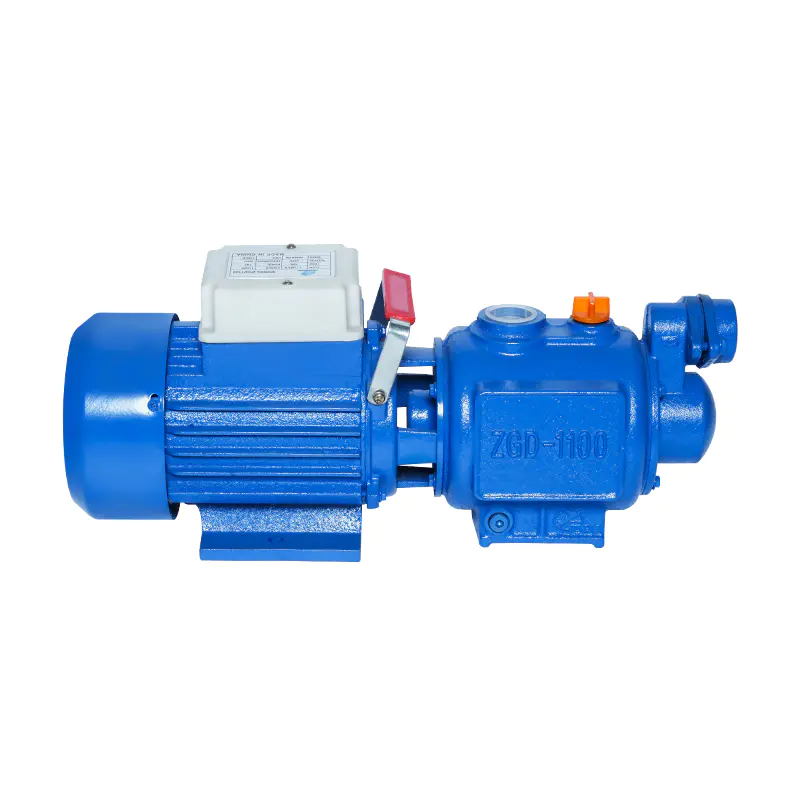
Pressure Loss Is a Physics Problem, Not a Plumbing Defect
Water loses pressure as it travels. Distance, elevation, and friction inside the pipe all work against it. This is not a sign that something is broken — it is just how fluid dynamics works in a real building.
Common reasons pressure falls short inside residential buildings:
- Height — every floor gained costs pressure, because water must be pushed upward against gravity. Upper floors in multi-storey homes routinely receive water at noticeably lower pressure than ground level
- Long pipe runs — water travelling through an extended network of pipes loses pressure to friction along the way, particularly in older homes with narrower pipe diameters
- Municipal supply limitations — the incoming pressure from the street is sometimes insufficient to serve the whole building adequately, especially during peak demand hours
- Partially closed valves or scaled pipes — even a slightly restricted section of pipe reduces the effective pressure downstream
The fix does not always lie in the pipes themselves. Often the infrastructure is fine — the pressure just needs a mechanical boost at the right point in the system.
How Does a Booster Pump Actually Work?
From Slow Flow to Full Pressure: The Mechanism
A booster pump sits in the water supply line and increases the pressure of water passing through it. Water enters the pump at whatever pressure the supply provides. Inside, a rotating impeller accelerates the water — adding kinetic energy to the flow. That kinetic energy converts to pressure as the water exits the pump and enters the household plumbing network.
The result: water that arrived at the pump at a pressure too low to serve the building adequately leaves at a pressure high enough to reach every fixture with force.
The pump does not create water. It does not store it. It simply adds mechanical energy to the flow — converting motor work into pressure that the plumbing system can use.
What Makes Up a Complete Booster Pump System?
More Than Just a Pump Body
A standalone pump is rarely installed alone. A complete residential pressure boosting setup typically includes several components working together:
- Pump body with impeller — the core pressure-generating component
- Pressure sensor or pressure switch — monitors the line pressure and triggers the pump when it drops below a set threshold
- Check valve — prevents boosted water from flowing backward into the supply line when the pump is off
- Expansion tank — absorbs pressure fluctuations and prevents the pump from cycling on and off too frequently for minor demand changes
- Control unit — manages automatic start and stop, and in variable-speed systems, adjusts motor speed to match the demand in real time
Each component serves a distinct function. Removing any one of them typically causes either operational problems or reduced pump life. The expansion tank, for example, is small and often overlooked — but without it, the pump may short-cycle repeatedly and wear out prematurely.
Does the Pump Run Constantly?
Automatic Control Keeps Energy Use in Check
This is a common concern, and the answer is no — at least in any modern, properly configured system. The pressure switch or sensor watches the line pressure continuously. When someone opens a tap and pressure drops, the pump starts. When the demand stops and pressure recovers to the target level, the pump stops.
Variable-speed systems — often called constant pressure systems — take this further. Instead of running at fixed speed and simply switching on or off, the motor adjusts its speed dynamically to match exactly what is being drawn at any given moment. If one tap is open, the pump runs slower. If three fixtures are in use simultaneously, it ramps up. The result is steady, even pressure across the home rather than surges and drops as demand changes.
Both approaches use energy proportionally to demand. A booster pump that is correctly sized and controlled will not add dramatically to electricity costs — it runs only when flow is actually happening.
Which Homes Need a Booster Pump?
Recognizing the Scenarios Where Pressure Boosting Makes Sense
Not every low-pressure complaint requires a pump. Sometimes the issue is a partially closed isolation valve or a scaled shower head — both of which are easier fixes. But certain situations point clearly toward a pressure boosting solution:
- Upper floors in multi-storey residential buildings — gravity pressure loss is structural and cannot be solved by anything other than adding energy to the water
- End-of-line homes in low-pressure municipal zones — homes at the far end of a supply network often receive pressure that is adequate in theory but insufficient in practice
- Rural properties on well water — well pumps sometimes deliver at pressure levels that are comfortable for basic use but insufficient for modern appliances and fixtures
- Homes with solar water heaters or rooftop tanks — gravity-fed systems from rooftop storage routinely suffer from low pressure on lower floors when the tank head is not high enough
- Properties undergoing renovation with added bathrooms or fixtures — adding plumbing points to an existing system without boosting often leaves the whole network underserved
If the pressure problem is consistent, present across multiple fixtures, and worse on upper floors or during peak use hours, a booster pump is addressing the right variable.
Comparing Pressure Boosting Options
Different pump configurations suit different home types and supply situations. A broad comparison helps clarify the decision:
| System Type | Suitable For | Pressure Control | Energy Behavior |
|---|---|---|---|
| Single-stage centrifugal booster | Small homes, single-zone boosting | On/off switch | Runs at fixed speed |
| Multi-stage centrifugal booster | Multi-storey buildings, high-pressure demand | On/off or adjustable | Fixed speed, higher output |
| Variable speed (constant pressure) | Homes with varying demand, comfort-focused | Continuous adjustment | Matches demand dynamically |
| Tank-based booster system | Intermittent supply areas, well water | Pressure switch | Fills tank, then pumps on demand |
The variable speed option is increasingly standard in residential installations where pressure consistency across multiple simultaneous use points matters. Fixed-speed systems remain practical and cost-effective for simpler single-zone applications.
Is Installation Complicated?
What the Process Typically Involves
Installation complexity depends on where in the plumbing system the pump is being added and whether an expansion tank and pressure controls are being included. For a straightforward single-inlet installation on a home with accessible pipework, a competent plumber can complete the job in a few hours.
Key steps in a typical residential booster pump installation:
- Identify the correct location in the supply line — usually after the main stop valve and before the point of distribution
- Shut off the water supply and drain the relevant section of pipe
- Install the pump body with appropriate isolation valves on either side for future servicing
- Connect the pressure sensor and control wiring
- Install the check valve downstream of the pump
- Add the expansion tank at the correct point in the pressurized section
- Restore water supply, check for leaks, and test the pump cycle
Most residential systems do not require structural modification or major pipework rerouting. The pump is added into the existing line rather than replacing it. That said, electrical connection for the pump motor should be handled by a qualified electrician, particularly where the pump is installed in a damp or confined space.
Noise, Vibration, and Long-Term Operation
What to Expect After Installation
A properly installed booster pump in good condition should not be noticeably disruptive. Modern residential booster pumps run quietly, particularly variable-speed models that avoid the abrupt start-stop cycle of older switching systems. That said, a few factors affect how noticeable the pump is in daily use:
- Mounting surface — pumps mounted rigidly to masonry walls transmit vibration into the structure; rubber anti-vibration mounts reduce this considerably
- Pipe connections — flexible connectors between the pump and rigid pipework prevent vibration from traveling through the plumbing network
- Pump location — installing the pump in a utility room, basement, or service cupboard rather than adjacent to living spaces reduces audible impact
Noise tends to be more noticeable in systems that are short-cycling frequently — a symptom of an undersized expansion tank rather than the pump itself. Addressing the expansion tank sizing typically resolves this.
Maintenance: How Much Attention Does a Booster Pump Need?
Routine Care That Extends Service Life
Residential booster pumps are designed for long-term, relatively hands-off operation. They do not have frequent consumable parts. But a few maintenance habits keep them performing reliably over years of use:
- Inspect the pump and connections periodically for any dripping or seepage at joints
- Check the expansion tank pressure annually — pre-charge pressure can drift over time and affects how the system cycles
- Clean any inline strainer or filter installed before the pump inlet to prevent debris from entering the impeller
- Listen for changes in operating sound — a pump that has become noisier or cycles more frequently than usual may need inspection
For most homeowners, annual inspection is sufficient. Properties on well water or in areas with sediment-heavy supply may benefit from more frequent strainer checks.
Choosing a Reliable Pump for Long-Term Home Use
A pressure boosting system is not a purchase most people make twice — it either works reliably for years or it becomes a recurring headache. The quality of the pump itself, the control system, and the configuration all feed into how long the system holds up and how well it performs during daily use. Caifu Pump Industry Co., Ltd. manufactures residential and light commercial booster pump systems designed for sustained operation in real-world supply conditions. Their product range addresses the needs of multi-storey residential buildings, rural water supply situations, and renovation projects where existing pressure is insufficient for modern plumbing demands. If you are evaluating a pressure boosting solution for a property — whether as a direct purchase or as part of a larger supply or distribution arrangement — reaching out to discuss the application specifics is a practical starting point for getting the system configuration right.

Leave A Comment
Recommend Products


Copyright © Caifu Pump Industry Co., Ltd.

High Pressure Water Pump Manufacturer