

 ENG
ENG  русский
 Español
 عربى
عربىWhat Causes Pressure Changes in Peripheral Centrifugal Pump
Pressure changes in a Peripheral Centrifugal Pump system often get noticed when flow turns uneven, connected equipment starts behaving oddly, or the outlet pressure just doesn't match what someone expected walking up to the gauge. The pump itself may be running perfectly normally, yet changes in the pipeline, inlet conditions, valve position, or system demand can alter how the whole arrangement behaves together. For installers, maintenance teams, and equipment buyers, spotting these surrounding factors first can make pressure problems a lot easier to actually understand rather than guess at.
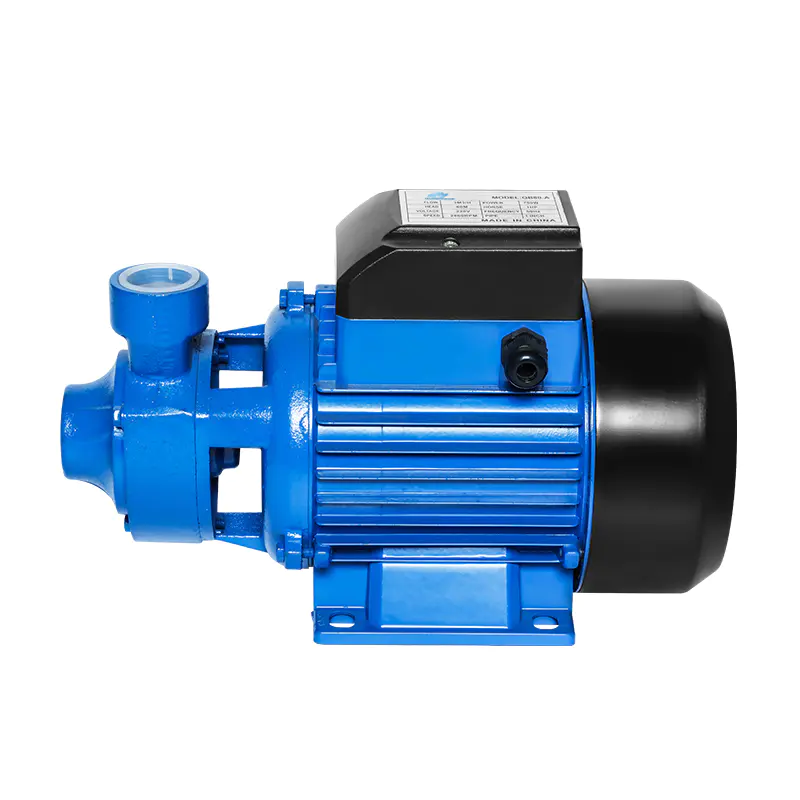
A pumping system amounts to more than just the pump body sitting in its housing. The pump, pipes, valves, inlet source, outlet equipment, and operating conditions all interact constantly during normal use, whether anyone's watching or not. When one part shifts, the pressure seen elsewhere in the system tends to shift right along with it. This is exactly why pressure variation deserves examination from the perspective of the complete installation, not from staring at the pump alone like it's the only variable in the room.
How Does Pipeline Resistance Affect Pump Pressure?
Pipeline resistance changes the pressure relationship within a pumping system because liquid has to physically travel through pipes, bends, fittings, and whatever else sits in its path along the way. A simple, open flow path behaves quite differently from a system packed with direction changes or restrictions squeezed in tight. The pump has to work against whatever conditions that complete path actually creates, whether it was planned that way or not.
Pipe arrangement therefore becomes a genuinely important part of pressure analysis, not an afterthought tacked onto the pump spec sheet. Long routes, narrow passages, sharp turns, filters, and multiple fittings can all shape how easily liquid actually moves through the system end to end. Even when the pump itself stays completely unchanged, modifying the surrounding pipework alone can produce a noticeably different operating condition.
Common pipeline factors include:
| Pipeline Factor | Possible Effect on Operation |
|---|---|
| Pipe length | Changes the resistance along the flow path |
| Pipe arrangement | Influences how liquid travels |
| Bends and fittings | Add resistance within the route |
| Filters or screens | May restrict flow when unsuitable or blocked |
| Pipe condition | Can affect the available flow path |
This doesn't mean a system with more fittings automatically runs into a pressure problem down the line. The important point stays that the pump should get selected and installed with the actual pipeline arrangement genuinely in mind, not chosen off a catalog page in isolation.
For a Peripheral Centrifugal Pump specifically, matching the pump with the intended piping system helps create a far more predictable operating condition once everything's connected. If the pump gets selected without considering the complete route it'll be working against, pressure changes can become genuinely hard to explain after installation, leaving a technician scratching their head weeks later.
Can Inlet Conditions Cause Pressure Changes?
Yes, quite directly in fact. The conditions right at the pump inlet can strongly influence how consistently the pump actually receives liquid to begin with. If the inlet path is restricted, poorly arranged, or affected by an unstable liquid source upstream, the pump may not operate the same way it would under steady, predictable inlet conditions.
The inlet side deserves real attention here, since the pump depends entirely on a suitable supply of liquid arriving reliably. A blocked screen, a partially closed valve someone forgot to reopen, a poorly positioned pipe, or a changing liquid level in a tank can all alter the conditions actually entering the pump.
Air entering the inlet path causes its own kind of trouble too. Instead of receiving a continuous liquid supply, the pump ends up dealing with an irregular flow condition that shows up as odd behavior downstream. This can appear as changes in pressure, unusual noise coming from the pump housing, or inconsistent discharge that seems to come and go.
Installers can inspect several areas once pressure starts fluctuating unexpectedly:
- Inlet valve position
- Pipe connections
- Inlet filter condition
- Liquid supply condition
- Possible air entry points
- Changes made to the inlet arrangement
The inlet pipe deserves consideration as part of the pump installation itself, not as some independent component bolted on separately. A pump simply cannot compensate indefinitely for a supply path that isn't up to the job.
When a Peripheral Centrifugal Pump shows different pressure behavior right after changes to the inlet arrangement, those new installation conditions deserve a review before anyone jumps to assuming the pump itself has developed a fault.
What Role Does Valve Position Play in Pressure Changes?
Valve position directly influences how easily liquid moves through a system, more than people often expect from a simple mechanical piece. A fully open passage provides a genuinely different operating condition compared to a partially restricted one sitting at the same spot. When a valve gets adjusted, the resistance within the system changes, and the pressure relationship shifts right along with it.
This shows up regularly in systems where operators adjust flow according to changing daily requirements. A valve might get opened wide to supply several outlets at once, or restricted down when only part of the system is actually in use that day. The pump keeps operating exactly as before, but the surrounding conditions around it are no longer the same at all.
Valve problems can also develop quietly without any obvious external signs pointing to them. A valve might not move as far as expected when turned, or its internal condition might restrict the passage more than it should. An incorrectly positioned valve can make a perfectly normal pump appear to have inconsistent performance to anyone troubleshooting from the outside.
| Valve Condition | What to Check |
|---|---|
| Fully open | Confirm the expected flow path |
| Partially open | Consider whether the restriction is intentional |
| Closed | Check whether another flow route is available |
| Difficult to operate | Inspect for mechanical issues |
| Recently adjusted | Compare the new position with operating requirements |
Valve adjustment should always happen with the complete system in mind, not treated as an isolated tweak. Changing one valve can affect other parts of the installation quite a bit, especially in setups where several outlets share the same pump.
For maintenance teams, recording normal valve positions during routine visits can make future troubleshooting a lot faster. When pressure changes crop up later, an unexpected valve position gets identified a lot more quickly against that baseline record.
How Does System Demand Influence Pump Pressure?
System demand shifts constantly throughout daily operation, rarely staying flat for long. A pumping system supplying one outlet behaves quite differently once several outlets get opened at the same time during a busy period. Changes in demand alter how the available flow actually gets distributed through the system as a whole.
This becomes particularly noticeable in installations serving multiple users or processes at once, like a building with several floors drawing from the same line. A system might need considerably more liquid during one operating period of the day and noticeably less during another quieter stretch. The pressure observed at a particular point can shift right along with that changing demand.
The pump should therefore get considered in relation to the actual application it's serving, not some generic average case.
| System Demand | Installation Consideration |
|---|---|
| Single outlet | Focus on the individual flow path |
| Multiple outlets | Consider how flow is divided |
| Changing demand | Allow for different operating conditions |
| Intermittent use | Consider start and stop patterns |
| Continuous use | Check whether the pump suits ongoing operation |
A mismatch between pump characteristics and system demand can make pressure control noticeably harder to manage day to day. A pump selected for one operating condition might not behave as expected once the system gets expanded or modified down the road, sometimes years after the original install.
This is exactly why pressure changes sometimes appear right after a new outlet, a longer pipe route, or an additional piece of equipment gets introduced into the system. The pump hasn't changed at all, but the system surrounding it certainly has.
Why Is Pump Matching Important for Pressure Stability?
Pump matching matters because every pumping system carries its own distinct operating requirements, shaped by the specific job it's doing. The pump needs to work with the intended flow path, liquid supply, outlet arrangement, and expected demand all together, not just one of these in isolation.
Choosing a pump based purely on its general product category can leave important application details completely unaddressed. Two installations might use the exact same type of pump while having very different pipe layouts and operating conditions sitting behind them, leading to two very different results.
A suitable selection process can consider:
- The purpose of the pumping system.
- The expected flow requirement.
- The arrangement of the inlet and outlet pipes.
- The number of connected points.
- The expected operating pattern.
- The available installation space.
- The surrounding equipment.
This approach cuts down considerably on the chance of selecting a pump that just doesn't fit the actual system it's dropped into.
For buyers comparing a Peripheral Centrifugal Pump against other pump arrangements, the application itself should stay the main reference point throughout the decision. The real question isn't simply whether the pump can create pressure at all. It's whether the pump can work appropriately with the conditions created by the complete system surrounding it.
Can Pipe Leakage Cause Pressure Fluctuation?
Yes, and often more than people initially assume. Leakage reduces the amount of liquid actually reaching its intended destination, and that shortfall changes the pressure observed at different points throughout the system. Even a small leak becomes a lot more noticeable once the system runs for long stretches or once demand shifts unexpectedly.
Leaks tend to show up at pipe joints, valve connections, seals, or other connection areas where two components meet. Some are easy enough to spot, since liquid visibly collects around the affected spot on the floor or wall. Others prove genuinely hard to identify, especially when the leaking area sits hidden behind equipment or the liquid evaporates quickly before anyone notices.
A practical inspection should look well beyond just the pump housing itself.
Check the surrounding pipe connections for moisture, unusual staining, or signs of repeated leakage building up over time. Pay close attention to locations where pipes connect to valves, fittings, or other equipment nearby. If pressure changes show up together with visible leakage somewhere, that affected section deserves inspection before anyone starts making changes to the pump itself.
Air leakage on the inlet side creates a genuinely different kind of problem worth watching for separately. The connection might not release much visible liquid at all, yet air can still slip into the system and disturb the inlet condition in ways that are harder to trace.
Good connection practices support far more stable pump operation as a result. Pipe joints should suit the actual installation, and connection points should stay reasonably accessible for inspection and maintenance down the road.
How Can Installation Layout Affect a Peripheral Centrifugal Pump?
Installation layout shapes both the hydraulic path liquid travels and how convenient the pump is to actually maintain later on. A pump wedged into a crowded or poorly arranged area becomes a lot harder to inspect properly, while an unsuitable pipe route can introduce unnecessary resistance or leave the inlet condition genuinely less stable.
The physical position of the pump should work with the surrounding system rather than fighting against it. Inlet and outlet pipes should get arranged without creating restrictions that could've easily been avoided with better planning. Valves and inspection points should also stay accessible so operators can actually spot changes when they happen, rather than needing to move three other pieces of equipment first.
A practical layout can separate the main functions of the installation clearly:
| Area | Purpose |
|---|---|
| Pump area | Houses the pumping equipment |
| Inlet side | Supplies liquid to the pump |
| Outlet side | Directs liquid toward the application |
| Valve area | Controls the flow path |
| Inspection area | Allows maintenance and checking |
Space planning becomes more important once the system includes several connected components crowding the same room. A compact installation might save valuable floor space, but it shouldn't make routine inspection unnecessarily difficult for whoever's checking on it monthly.
A well-planned layout also makes future modifications a lot easier to assess before committing to them. When another pipe or outlet gets added later, technicians can actually see how that change might affect the existing pump arrangement rather than discovering problems after the fact.
What Maintenance Checks Can Help Identify Pressure Changes?
Maintenance checks help distinguish between genuine pump-related issues and changes happening elsewhere in the system. A pressure change shouldn't automatically get treated as evidence the pump needs replacing, since that's often not where the real problem lives.
A useful inspection can start with the simplest possibilities first, before reaching for more complicated explanations. Check valve positions, inspect visible pipe connections, examine inlet conditions, and look closely for changes in the system configuration. Recent installation work or adjustments made by anyone on site should also get factored into the review.
The following areas can provide useful clues during troubleshooting:
- Pump condition
- Inlet pipe and connections
- Outlet pipe arrangement
- Valve positions
- Filters and screens
- Visible leakage
- Changes in system demand
- Recent modifications
Cleaning matters here too, wherever filters or screens form part of the installation. A restricted passage can change the conditions around the pump considerably even though the pump itself hasn't changed one bit.
Maintenance records help identify patterns that might otherwise go unnoticed. If pressure changes appear right after a particular valve adjustment or system modification, that timing offers genuinely useful information during the next inspection.
For equipment suppliers and system installers, clear maintenance guidance also supports easier troubleshooting down the road. Users benefit considerably when they understand which surrounding components deserve a check before jumping straight to major changes on the pumping equipment itself.
How Should Pressure Changes Be Evaluated During System Design?
Pressure changes become a lot easier to manage when the system gets considered as a complete arrangement right from the design stage, not patched together afterward. Pump selection, pipe routing, inlet conditions, valve placement, and expected demand should get reviewed together as connected pieces, rather than handled as separate decisions made in isolation from each other.
The design should reflect how the system will actually get used day to day, not some idealized scenario. A small installation with a simple flow path calls for a different approach than a system juggling several outlets and shifting operating conditions throughout the week.
A useful design review can ask a handful of practical questions along the way.
Where does the liquid come from? The inlet arrangement needs to provide a suitable supply path for the pump to draw from reliably.
Where does the liquid go? The outlet route should match the intended application without unnecessary restrictions slowing things down.
How will flow be controlled? Valve placement should allow practical operation and maintenance without awkward reaching or guesswork.
Will system demand change? The pump needs consideration against the full range of expected operating conditions, not just the average day.
Can the system be inspected easily? Components that influence pressure should stay accessible for routine checks rather than buried behind other equipment.
These questions help connect the Peripheral Centrifugal Pump with the rest of the installation as one working whole. They also make it a lot easier to figure out why pressure changes when the system gets modified, even though the pump itself never changed at all.
A pressure variation is usually the result of several small conditions working together quietly rather than one dramatic failure. Pipeline resistance, inlet supply, valve position, leakage, system demand, and pump selection can each shape the operating relationship in their own way. Looking at these factors together as parts of one connected system gives installers and maintenance teams a genuinely clearer way to understand pressure changes during everyday, ordinary operation.

Leave A Comment
Recommend Products


Copyright © Caifu Pump Industry Co., Ltd.

High Pressure Water Pump Manufacturer